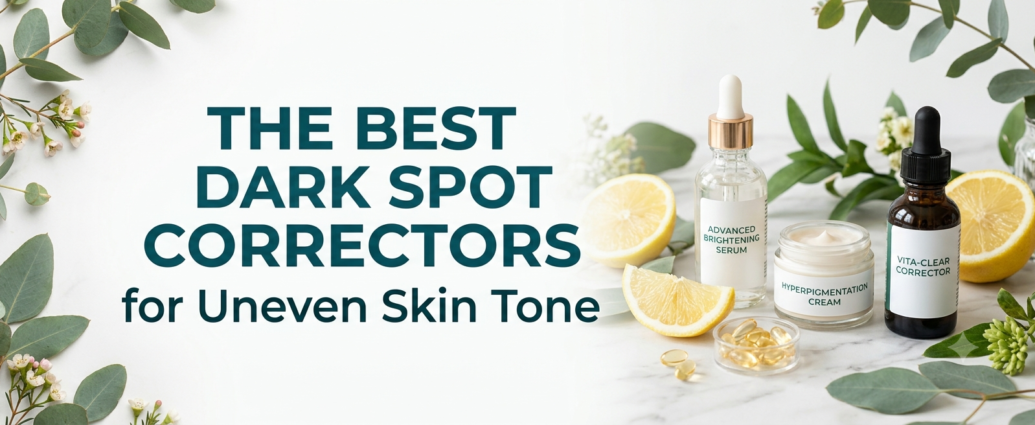
We all want clear or healthy skin, but that one dark spot that refuses to leave? Whether it’s leftover acne marks, those tiny sun spots, or a patch of uneven pigmentation, stubborn marks can make your skin feel less shiny or even. The most difficult part is that not every dark spot has the same cause, so the right corrector depends on your skin type, sensitivity, and the most important ingredients it contains. Dermatologists recommend ingredients such as glycolic acid, kojic acid, retinoids, and vitamin C that help fade dark spots. But when you want to see visible results, you have to be consistent because it matters. Don’t skip daily sunscreen; it helps prevent marks from getting darker while your skin works towards a more even tone.
Explore Best Dark Spot Correctors
If you are looking for the best cream to hide dark spots, choosing a spot corrector depends on what you want to target, actually. It could be from post-acne marks and sun spots to melasma and overall uneven tone. Here’s a quick comparison to help you choose according to your concern or skin type.
| Best Dark Spot Corrector | Good For (concern) | Ingredients | Key Advantages |
| Avene Vitamin Activ Cg Radiance Serum | Overall | Vitamin C, Niacinamide, Bakuchiol | Brightens and targets dark spots |
| Caudalie Vinoperfect Brightening Dark Spot Serum | Acne marks | Viniferine, Squalane | Lightweight daily brightening |
| Neutrogena Rapid Tone Repair Dark Spot Corrector | Sun spots | Retinol, Vitamin C | Targets discoloration and texture |
| Topicals Faded Brightening & Clearing Serum | Melasma | Tranexamic Acid, Azelaic Acid | Multi-ingredient discoloration care |
| PCA Skin Pigment Gel HQ Free | Sensitive skin | Kojic Acid, Azelaic Acid, Lactic Acid | Hydroquinone-free formula |
| The Ordinary Niacinamide 5% Face & Body Emulsion | Melanin-Rich Skin | Niacinamide | Helps improve uneven tone |
How Should You Choose the Best Dark Spot Correctors?
Choosing a dark spot corrector requires more than comparing product claims. Evaluate the formula, the type of pigmentation it targets, your skin type, and its potential for irritation.
Ingredients & Formula
Before applying any skincare product, look for evidence-backed ingredients such as vitamin C, niacinamide, kojic acid, and retinoids. Also consider how these ingredients work together when applied to your skin, their concentrations, and whether the formula supports consistent use without overwhelming the skin.
Effectiveness for Different Types of Dark Spots
Not everyone needs to have the same pigmentation or dark spots. So it is necessary to choose the right corrector fr match the type of pigmentation you want to treat. Acne marks often respond well to ingredients that reduce post-inflammatory pigmentation, while sun spots and age spots may benefit from stronger brightening and cell-renewal ingredients. For general uneven tone, choose formulas that gradually brighten and improve overall skin clarity.
Skin-Type Compatibility
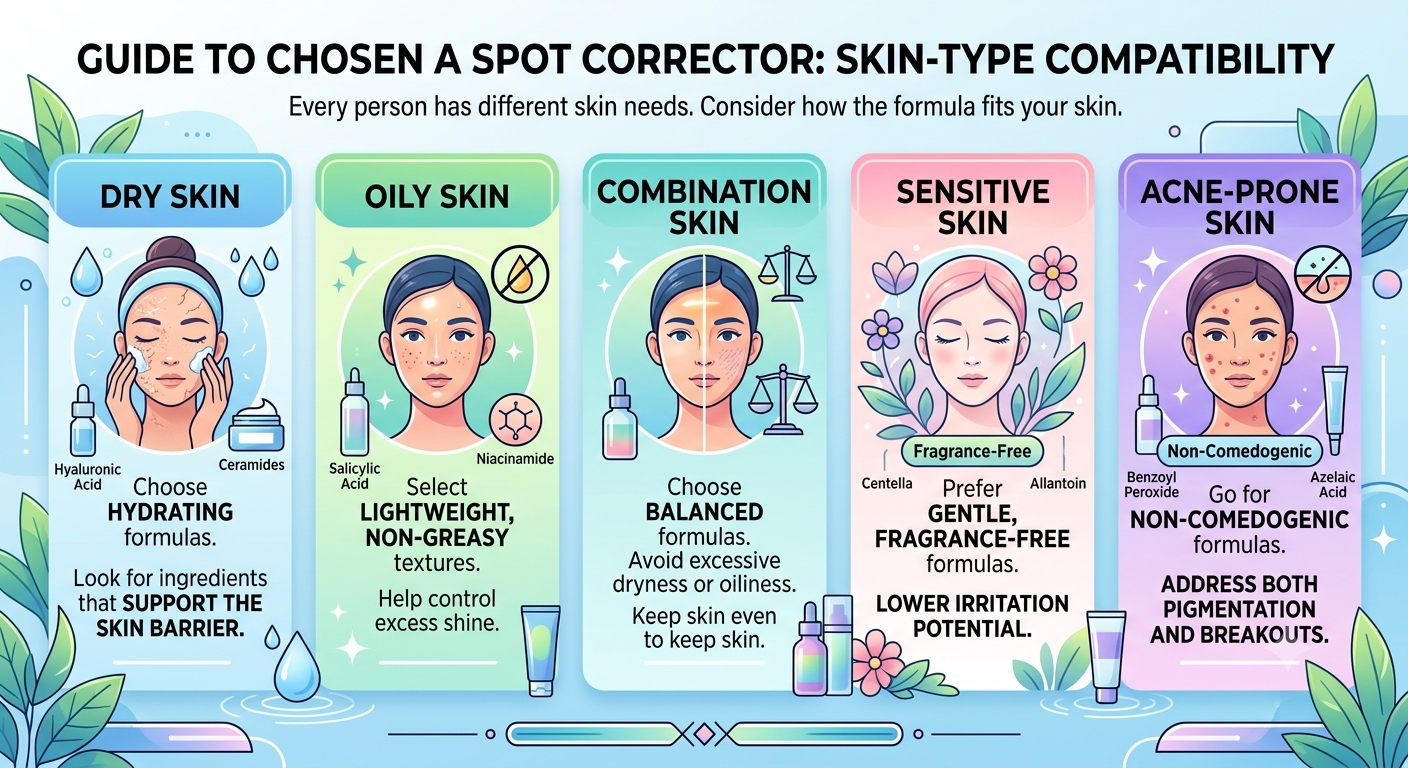
We all know that every person has a different skin tone, skin type, or lifestyle. So, while choosing the spot corrector, consider how the formula fits your skin’s needs:
- If you have dry skin: Choose hydrating formulas that support the skin barrier.
- If you have Oily skin: Always look for lightweight, non-greasy textures.
- If you have Combination skin: Choose balanced formulas that avoid excessive dryness or oiliness.
- If you have Sensitive skin: Prefer gentle, fragrance-free formulas with lower irritation potential.
- If you have Acne-prone skin: Go for non-comedogenic formulas and ingredients that address both pigmentation and breakouts.
Irritation Potential
Check for potential irritants before choosing a product. Fragrance, exfoliating acids, retinoids, and highly concentrated actives can cause redness, dryness, or sensitivity, particularly when combined. A well-formulated corrector should deliver effective ingredients while remaining suitable for regular use.
How to Choose the Right Dark Spot Corrector for Your Skin?
The best dark spot corrector depends on what is causing the discoloration, your skin type, sensitivity, and how much irritation your skin can tolerate. I use the concern-first approach below to narrow down the right formula.
If You Have Uneven Skin Tone
First, you should know why uneven skin tone happens. It happens for a variety of reasons, primarily due to excessive or uneven production of melanin in the skin and sometimes when your skin makes too much pigment in some spots. So in this situation, look for pigment-targeting ingredients because this approach can help achieve visible results without focusing only on individual dark spots.
My Suggestion – The Ordinary Niacinamide 5% Face and Body Emulsion for Dark Spots & Uneven Tone. I recommend this pick for those specifically searching for the best dark spot corrector for uneven tone, as its niacinamide-based formula targets the look of dark spots across the face and body.
If You Want a Dark Spot Corrector for All Skin Tones
Different skin tones can develop hyperpigmentation, but the appearance and stubbornness of dark spots can vary. An expert suggestion is to prefer formulas that target excess pigmentation while fitting into a consistent daily skincare routine.
My Suggestion – La Roche-Posay Mela B3 Serum Dark Spot Corrector. This is my choice for the best dark spot corrector for all skin tones when the goal is to visibly improve dark spots and uneven pigmentation.
If You Have Sensitive Skin
Having sensitive skin is not easy because it needs a more careful approach. If you have sensitive skin, then prioritize gentle formulas, fewer potentially irritating actives, and pigment correction rather than using several strong ingredients at once.
My Suggestion – PCA Skin Hydroquinone-Free Face Serum. This makes a suitable choice for people looking for a hydroquinone-free dark spot corrector without adding hydroquinone to their routine.
If You Have Oily or Acne-Prone Skin
If you have oily and acne-prone skin, you could experience excessive sebum production leading to common issues such as acne, persistent shine, and large pores. The main causes of oily skin are genetics, hormones, diet, and lifestyle.
My Suggestion – SkinMedica Even and Correct Dark Spot Cream. This is my choice for the best dark spot corrector overall when I want a targeted formula for stubborn discoloration and an uneven-looking complexion.
If You Want a Moisturizing Dark Spot Corrector
If your skin feels dry while you treat discoloration, I look for a formula that combines pigment-focused care with ingredients that help maintain a comfortable skin barrier.
My Suggestion – CeraVe Resurfacing Retinol Serum. I recommend this option when you want a moisturising dark spot corrector that also uses retinol to improve the appearance of post-acne marks and uneven texture.
What Causes Dark Spots and Uneven Skin Tone?
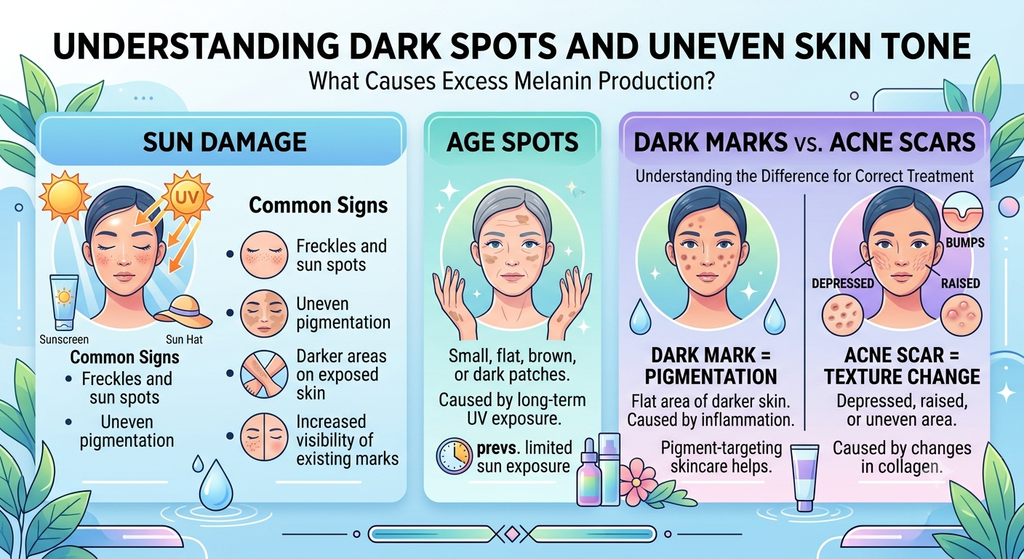
Dark spots develop when certain areas of the skin produce or retain more melanin, the pigment responsible for skin colour, and several factors can trigger this –
- Sun Damage
UV exposure can stimulate excess melanin production, which can lead to visible new dark spots and make existing pigmentation harder to fade. Common signs include –
- Freckles and sun spots
- Uneven pigmentation
- Darker areas on frequently exposed skin
- Increased visibility of existing dark marks
- Age Spot
Age spots are sometimes small, flat, brown or dark patches that commonly appear on sun-exposed skin. Usually, it is caused by long-term exposure to ultraviolet light (UV) rays, so using consistent sunscreen and limiting sun exposure can help prevent new age spots.
- Post-Acne Dark Marks vs. Acne Scars
Dark marks and acne scars are not the same thing, and choosing the right treatment depends on the difference.
- Dark mark = pigmentation: A flat area of darker skin left after acne or inflammation. Pigment-targeting skincare can help improve its appearance over time.
- Acne scar = change in skin texture: A depressed, raised, or uneven area caused by changes in collagen during the healing process.
How to Use a Dark Spot Corrector in Your Skincare Routine?
Consistency is the key element. A simple, consistent routine can help you use a dark spot corrector effectively while minimizing irritation. Follow the steps below for both morning and evening care.
| Steps | Morning routine | Evening routine |
| Cleanse | Use a gentle cleanser to remove oil and impurities. | Cleanse to remove sunscreen, makeup, oil, and buildup. |
| Treat | Cleanse to remove sunscreen, makeup, oil, and buildup. | Apply your dark spot treatment or serum. |
| Mositure | Apply a moisturizer to support the skin barrier. | Apply a moisturizer to prevent dryness and support the skin barrier. |
| Protect | Finish with a broad-spectrum sunscreen. | No sunscreen needed at night. |
Don’t Layer Too Many Strong Actives at Once
Avoid combining multiple exfoliating acids, retinoids, or other potent actives unless the product directions or a dermatologist recommend it.
How Long Does It Take for Dark Spot Corrector to Work?
If you’re using a dark spot corrector, so don’t expect results overnight because it takes time. Most skincare products take a few weeks of regular use before you start noticing a difference in your skin. How quickly you see results can also depend on your skin and how deep or old the dark spots are.
Week 1–2: Getting Started
During the first couple of weeks, focus on using the product regularly and making sure your skin is comfortable with it.
- Follow the instructions on the product.
- Watch for dryness, redness, or irritation.
- Use sunscreen every morning.
- Avoid using too many strong skincare products at the same time.
Week 3–6: Small Changes
After a few weeks, you may start noticing that your skin looks brighter and your skin tone appears more even. Some dark spots may also begin to look lighter. Don’t worry if the changes are small. Older or deeper spots usually take longer to fade.
Week 6–12 and Beyond: More Visible Results
With continued use, you may see more noticeable changes after 6–12 weeks. Some pigmentation can take even longer to improve, so patience is important. A simple way to track your progress is to take photos every few weeks in the same lighting. This makes it easier to notice changes over time.
Common Mistakes That are Making Your Dark Spots Worse
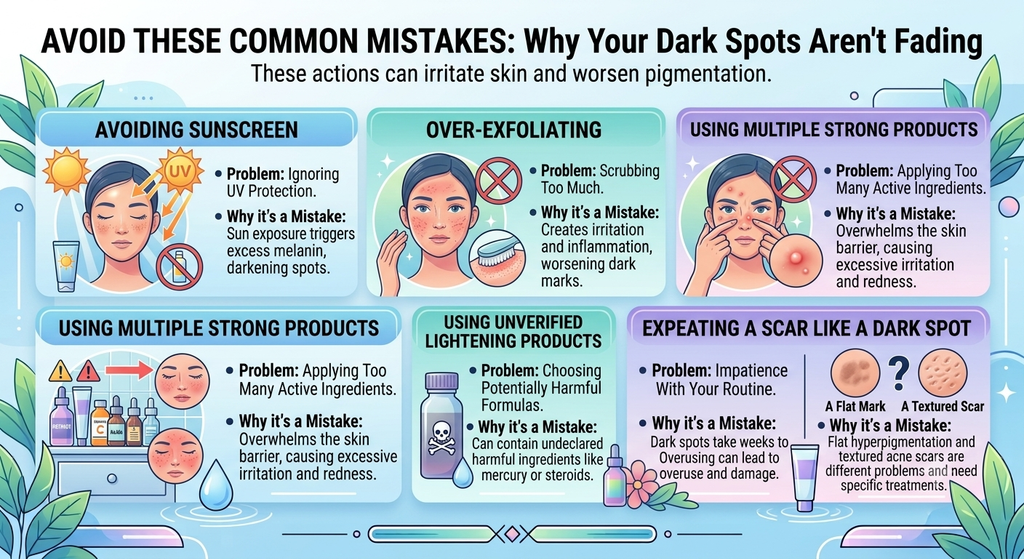
Here are common mistakes to avoid when trying to improve dark spots and uneven skin tone, so try to avoid these mistakes –
| Common Mistake | Why It Can MakeYour Dark Spots Worse |
| Avoiding sunscreen | UV exposure can trigger more melanin production and make existing dark spots look darker. |
| Over-exfoliating | Excessive exfoliation can irritate the skin and cause inflammation, which may worsen pigmentation. |
| Picking or popping acne | Picking breakouts can damage the skin and increase the risk of post-inflammatory hyperpigmentation. |
| Using multiple skincare products | Combining several strong ingredients can cause irritation, dryness, or redness. |
| Using skin-lightening products | Some unverified products may contain harmful or undeclared ingredients (such as mercury or steroids). |
| Expecting instant results | Dark spots usually take weeks or longer to fade. Trying to speed up the process can lead to overuse and irritation. |
| Treating a scar like a dark spot | A flat dark mark and a textured acne scar are different skin concerns and may require different treatments. |
Conclusion
If you are also facing dark spots, consider choosing the right skincare according to your skin type or sensitivity. So, in this concern, just picking up the most popular product is not a good decision. It is about understanding what’s causing your dark spots, knowing your skin type, and choosing the right ingredients that work well for your skin without any disadvantages. The key is to stay consistent with your routine, avoid using too many active ingredients at once, and most importantly, do not skip the sunscreen. By using daily sunscreen, you can prevent dark spots from getting worse. So with a little patience and the right routine, you can gradually achieve a more even and brighter-looking complexion.
Frequently Asked Questions
Q1. What is the best dark spot corrector for uneven skin tone?
Ans. The Ordinary Niacinamide 5% Face and Body Emulsion is a strong choice for uneven skin tone. Its niacinamide-based formula helps target the appearance of dark spots and overall uneven pigmentation.
Q2. What ingredient is best for dark spots?
Ans. There is no single best ingredient for everyone. Vitamin C, niacinamide, kojic acid, azelaic acid, and retinoids can help target different types of dark spots and uneven pigmentation.
Q3. What is the fastest way to fade dark spots?
Ans. Consistent use of a suitable dark spot treatment and daily broad-spectrum sunscreen offers a practical approach. Avoid over-exfoliating or combining too many strong actives, as irritation can make pigmentation more noticeable.
Q4. Can I use a dark spot corrector every day?
Ans. It depends on the formula and its active ingredients. Follow the product directions, introduce stronger treatments gradually, and avoid layering multiple potent actives if they cause dryness or irritation.
Q5. Do dark spot correctors work on dark skin?
Ans. Yes, dark spot correctors can help improve pigmentation on melanin-rich and darker skin tones. Choose a formula that supports gradual pigment correction and avoid excessive irritation, which can contribute to post-inflammatory hyperpigmentation.
Q6. What is the best skincare routine for dark spots?
Ans. Start with a gentle cleanser, followed by a dark spot treatment or serum, moisturizer, and broad-spectrum sunscreen in the morning. At night, cleanse, apply your treatment, and moisturize while avoiding too many strong actives at once.
Q7. Do dark spot correctors actually work?
Ans. Yes, dark spot correctors can gradually improve pigmentation with consistent use. Results depend on the cause of the dark spots, ingredients, skin type, sun exposure, and how consistently you use the product.
Q8. How quickly does a dark spot corrector work?
Ans. You may notice subtle changes in 3–6 weeks, while more visible improvement can take 6–12 weeks or longer. Deeper or older pigmentation often takes more time to fade.
Q9. How can I remove my dark spots naturally?
Ans. Protect your skin from the sun, avoid picking or irritating breakouts, and maintain a gentle skincare routine. Natural remedies may not reliably fade established pigmentation, so proven dark spot treatments and daily sunscreen offer a more dependable approach.